
EN
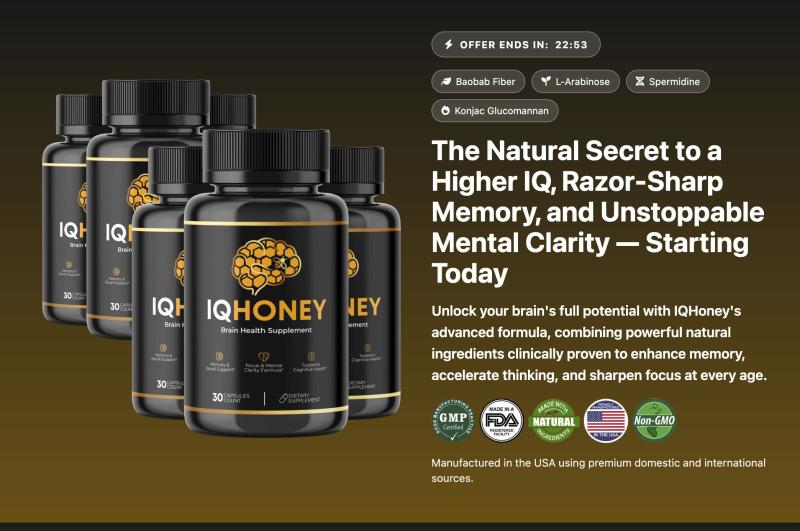
IQHoney is an online dietary supplement marketed as a brain health and cognitive support product. It is promoted with claims of improving memory, focus, nerve health, and mental clarity. Some advertisements describe IQ Honey as an ancient honey ritual or secret natural formula that can support a sharper mind, higher IQ, razor-sharp memory, and unstoppable mental clarity.
However, consumers should carefully examine these claims, the marketing methods used to promote IQHoney, and the available scientific information before making a purchase decision.
IQHoney is sold online as a cognitive supplement that claims to support brain performance and memory. Its advertisements often connect the product with concerns such as brain fog, memory loss, and age related cognitive issues.
Some promotional campaigns use long videos and articles that first introduce a hidden honey recipe, natural discovery, or special brain ritual before directing viewers toward purchasing IQ Honey capsules or pills. This approach can create the impression of a medical breakthrough, even though supplements should not replace proven medical treatments.
A major concern with IQHoney advertising is the use of false celebrity and expert associations. Some online promotions have falsely suggested that public figures such as Bill Gates, Meryl Streep, and Dr. Sanjay Gupta support IQ Honey or discovered a formula connected to memory improvement and Alzheimer’s disease.
These advertisements may include:
There is no verified evidence that these public figures have endorsed IQHoney or claimed that it can reverse dementia, Alzheimer’s disease, or other neurological conditions. Consumers should always verify health claims and endorsements through official sources.


Some IQ Honey advertisements promote the idea that a secret honey mixture, natural ritual, or special formula can reverse Alzheimer’s disease and dementia. These claims suggest that combining certain ingredients can restore memory or overcome serious neurological conditions. However, experts confirm that there is no scientific evidence showing that a honey based supplement can reverse major brain diseases such as Alzheimer’s disease or dementia.
Brain related health conditions require proper evaluation and guidance from qualified healthcare professionals. While some supplements may support general wellness, they should not be promoted as a cure or replacement for medical treatment.
Many brain supplements claim to improve memory, focus, and cognitive performance. However, strong clinical evidence is often missing, especially for claims involving major improvements in healthy adults.
Organizations such as Harvard Medical School and Johns Hopkins Medicine have noted that many cognitive supplements do not have enough scientific proof to confirm significant memory or cognitive benefits. Some perceived improvements may also be linked to the placebo effect rather than a proven change in brain function.
According to the IQHoney product label information reviewed, the formula contains 11 ingredients combined into a proprietary blend with a total weight of 1,400 mg.
Instead of showing the exact amount of each ingredient, the label only provides the total weight of the complete blend. Research published by PubMed Central (PMC) explains that manufacturers use proprietary blends to conceal individual ingredient quantities. This makes it difficult for consumers to know whether each ingredient is included at levels similar to those used in scientific research.
Several ingredients in IQ Honey have been studied separately for cognitive health, but those studies usually examine specific doses and standardized forms.
For example:
When these research based dosages are compared with IQHoney’s entire 1,400 mg blend, questions arise about whether the ingredients are present in meaningful quantities. Using studied amounts of Alpha GPC, Bacopa monnieri, and L-Tyrosine could approach or exceed the total weight of the entire formula.
This creates uncertainty about how much of the remaining ingredients are actually included. Independent nutrition discussions from Outwork Nutrition have raised concerns about this type of formulation, often described as fairy dusting, where many ingredients are included but some may only exist in amounts too small to match research based levels.
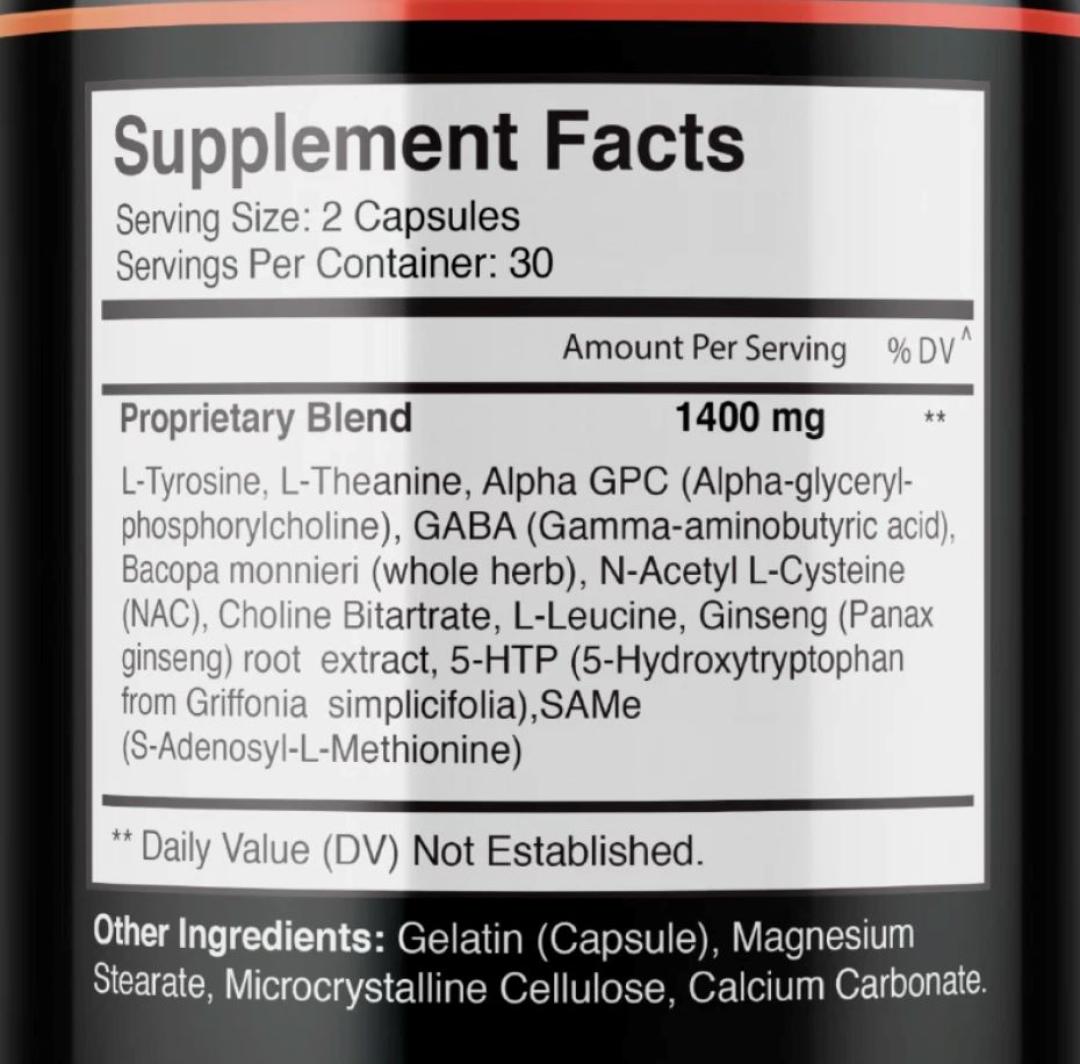
The main concern with the IQ Honey formula is the difference between clinically researched ingredient amounts and the size of the proprietary blend.
The label lists 11 ingredients from the highest amount to the lowest, but the total blend is only 1,400 mg. If ingredients such as Alpha GPC, Bacopa monnieri, and L-Tyrosine were included at research based levels, they could exceed the 1400 mg limit of the entire blend, leaving limited or no space for the remaining ingredients.
Because ingredients lower on the list are generally present in smaller amounts, some compounds may not reach the levels studied in scientific research.
According to discussions from Outwork Nutrition, this approach can make a formula appear more complete while providing limited information about whether each ingredient is included at effective amounts.
Some IQHoney advertisements may claim that the product is FDA approved or suggest official medical recognition. Consumers should be careful with these statements because dietary supplements are not automatically approved by the FDA before being sold like prescription medications.
FDA resources explain how dietary supplements are regulated and why consumers should review supplement claims carefully. Advertisements may also promote money-back guarantees. Before purchasing, consumers should review refund policies, subscription details, and payment conditions.
Consumer protection platforms, including BBB Scam Tracker, have received reports related to IQHoney-style marketing practices, including concerns about misleading promotions and unexpected billing issues.
Some reported concerns include:
Before buying IQHoney, consumers should carefully check the full price, subscription details, refund conditions, billing information, and company contact details.
Some IQ Honey sales pages may use trust building methods such as high ratings, large review numbers, or impressive customer scores. However, consumers should not depend only on reviews displayed on a product website. Independent verification is important because online ratings may not always provide a complete picture.
Shoppers should look for:
Some IQHoney promotions use emotional storytelling and long videos to keep viewers engaged. They may first suggest that users will discover a natural recipe or hidden secret before later presenting the supplement offer.
This strategy can make the product appear more credible by creating anticipation before the purchase request.
IQHoney is promoted as a brain health supplement for memory, focus, and mental clarity. However, consumers should carefully evaluate its claims before purchasing.
The product has been associated with questionable marketing practices, including fake celebrity endorsements, AI-generated promotional content, exaggerated health claims, reports about unexpected subscription charges and billing concerns, and unclear ingredient amounts due to its proprietary blend.
While some cognitive supplement ingredients have been studied, that does not mean IQ Honey can deliver the dramatic results shown in advertisements. Consumers should be cautious with products claiming to reverse serious medical conditions and should consult qualified healthcare professionals about memory, dementia, or cognitive health concerns.
Verification Notice: Please double-check the physical product label of any supplement you purchase to confirm the active ingredients, exact dosages, and allergen warnings match your expectations before consumption.
Medical Disclaimer: This information is for general educational purposes only, does not constitute a promotion or endorsement of any product, and does not constitute medical advice, diagnosis, or treatment. Always consult a qualified healthcare professional or physician before starting any new dietary supplement or weight loss regimen.
Author Information:
This article has been written by a Scam Fighter Contributor, De-Reviews.com Team. If you believe the article above contains inaccuracies or needs to include relevant information, please contact ScamAdviser.com using this form.
De-Reviews.com Team is a group of scam researchers, editors, and online safety advocates dedicated to exposing online fraud and helping consumers stay safe online. The team has been investigating scams, fraudulent websites, phishing campaigns, and other online threats since 2014. Read the Full Author Profile.
