
EN

Kaoru Hanayama is a name that seems to be completely captivating the internet through a massive, imposing bodybuilder figure that resembles a real-life comic book character. If you frequently scroll through social media feeds, you may have crossed paths with a colossal man sporting sharp suits, round spectacles, and distinctive facial markings. This figure is known online as the Kaoru Hanayama bodybuilder.
The immense physique and dramatic presence of this individual have left massive amount of viewers scratching their heads. Many people appear to be asking the same question: Is this iconic figure a living, breathing human being, or could it be a masterpiece of modern digital technology?
To understand the mystery, it helps to look at where this design comes from. The Kaoru Hanayama character name originates from a highly popular Japanese martial arts anime and manga series. In the fictional universe, this persona is celebrated for possessing superhuman strength, unparalleled grip power, and a legendary full-back tattoo. Because the animated version is so beloved, fitness enthusiasts around the globe often dream of seeing a real-life version of such a physical marvel.
The global fascination reached a new peak due to specific videos circulating on popular networking apps. If you look at the primary online presence under the handle @liveactionhanayama on Instagram, you will find a treasure trove of mind-boggling footage. In these clips, the Kaoru Hanayama seems to be performing unbelievable feats, such as strolling through dense city crowds or effortlessly altering solid objects.
This specific profile, which frequently collaborates with digital technology teams like Higgsfield AI, appears to be the main source of the viral content. While these uploads provide great entertainment, they do not seem to feature an actual, traditional actor filming in an open studio. Instead, the footage looks like it may be the result of highly sophisticated text-to-video AI-generation tools.
When evaluating the physical reality of the Kaoru Hanayama bodybuilder, the situation seems to involve two different chapters. On one hand, real-world athletes like the famous massive bodybuilder Lu Chenhui have previously dressed up as the character for fun fan events. Because of his incredible size, fans frequently call him a real-life version of the icon.
On the other hand, the highly polished videos making waves today may not be using a real person's picture at all. The towering figure in the latest clips seems to be a completely synthetic entity. The seamless skin textures, the perfectly placed scars, and the jaw-dropping body proportions suggest that the visual may be constructed from scratch using advanced algorithms. Rather than capturing a live performer, the creators seem to be utilizing artificial intelligence to generate a fictional athlete who looks convincingly lifelike.
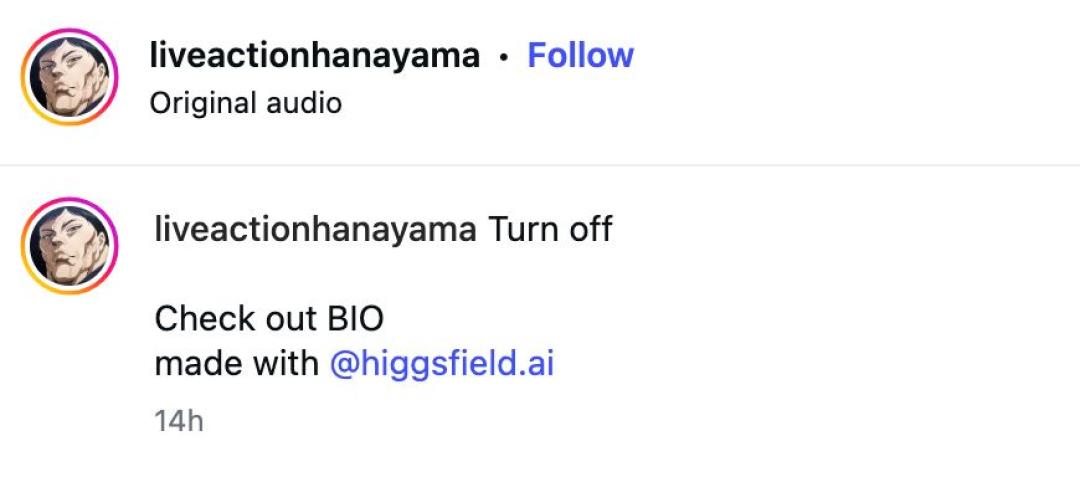
A closer look at the official social profiles appears to offer a clear explanation regarding the nature of the footage. The page manager seems to have openly stated directly in the main Instagram biography that "god made me in @higgsfield.ai". Additionally, individual video descriptions uploaded to the platform frequently feature notes specifying that the content was "made with @higgsfield.ai". These written disclosures provide solid proof and clear confirmation for viewers that the character appears to be originated from digital creation platforms rather than physical sets.
Ultimately, the phenomenon of the Kaoru Hanayama bodybuilder shows how thin the line between reality and digital art may be becoming. While real-world weightlifters definitely draw inspiration from the anime, the specific viral star dominating modern screens seems to be a product of digital imagination.
Because of the direct links and mentions involving @higgsfield.ai, the entire project seems to suggest that this spectacular character is AI-generated. Whether completely synthetic or partly inspired by human shapes, the project continues to entertain millions of fans worldwide.
The information presented in this article is intended for general informational, educational, and commentary purposes only. All observations regarding the nature of the project are based on publicly available data, social media tags, and visual presentations. This article does not claim to provide official statements or definitive confirmation regarding the internal operations, production methods, or corporate background of the project. The views expressed represent an analysis of public media trends and should not be interpreted as definitive fact or legal testimony.
This article includes screenshots of public social media pages and streaming platforms. These images are used strictly under the principles of Fair Use (and corresponding international copyright limitations) for the purposes of news reporting, critique, review, and public education. All trademarks, logos, brand names, and visual media elements remain the sole property of their respective owners and copyright holders. Their inclusion here does not imply any official endorsement, affiliation, or promotion by the creators or platform operators.
This article has been written by a Scam Fighter Contributor, De-Reviews.com Team. If you believe the article above contains inaccuracies or needs to include relevant information, please contact ScamAdviser.com using this form.
De-Reviews.com Team is a group of scam researchers, editors, and online safety advocates dedicated to exposing online fraud and helping consumers stay safe online. The team has been investigating scams, fraudulent websites, phishing campaigns, and other online threats since 2014. Read the Full Author Profile.
