
EN
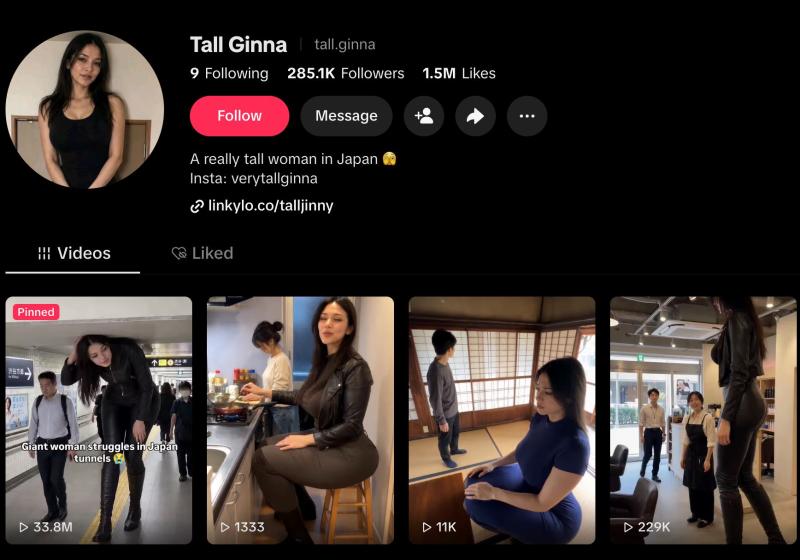
Tall Ginna has rapidly become one of the most talked about viral phenomena on modern social media feeds. Videos showcasing an exceptionally tall woman navigating the everyday streets, subways, and shops of Japan have taken over feeds worldwide. The visual contrast is stunning, leaving massive amount of viewers asking the same questions: Who is Tall Ginna? Is the internet personality known as Tall Ginna or Ginna Wang a real person, or is this towering figure an advanced digital creation?
For those wondering who is Tall Ginna, the profile presents a captivating narrative. On platforms like TikTok, the account @tall.ginna describes her as a remarkably tall woman experiencing daily life in Japan. The short video clips depict her struggling with low ceiling clearances in traditional structures, squeezing into standard fitting rooms, and towering over local historical monuments.
The content has quickly built a massive following, with the primary TikTok profile @tall.ginna accumulating hundreds of thousands of followers and massive amounts of likes. The digital footprint expands further onto Instagram under the handle @verytallginna, where the persona is often referred to under the name Ginna Wang with a profile description "A very tall girl living in Japan". Across these spaces, the content centers around the unique challenges and humorous situations encountered by someone of such a rare stature.
As the videos continue to rack up massive amount of views, a growing debate has emerged online: Is Tall Ginna Wang from Japan a real person or AI? At first glance, the videos appear highly convincing. The lighting transitions seamlessly, the textures of her clothing looking authentic, and the environments feature recognizable public spaces.
However, tech-savvy viewers have pointed out several technical indicators suggesting that the character might be the product of advanced generative software rather than a real-life individual. For instance, close observation of the background infrastructure in the videos reveals subtle anomalies. The edges of walls, train doors, and public signage sometimes seem to warp or distort slightly when the figure moves past them.
Furthermore, the facial features of random bystanders walking in the background often appear unusually blurred or indistinct, which is a common characteristic of hybrid digital rendering processes.
When examining the question of Tall Ginna real or fake, the platform's own automated systems offer compelling insights. While the official profiles do not explicitly state whether the content is artificially rendered, certain popular video uploads on the @tall.ginna TikTok account have been automatically tagged with a system label reading "Contains AI-generated media".
Platforms use these automated tags when their algorithms detect specific metadata digital signatures associated with AI development software. The presence of this label on selected clips provides strong evidence that digital editing tools or character generation models are likely playing a significant role in creating the imagery. Rather than representing a standard smartphone recording of a real person, the media seems to utilize a consistent character blueprint mapped seamlessly into real world video plates.
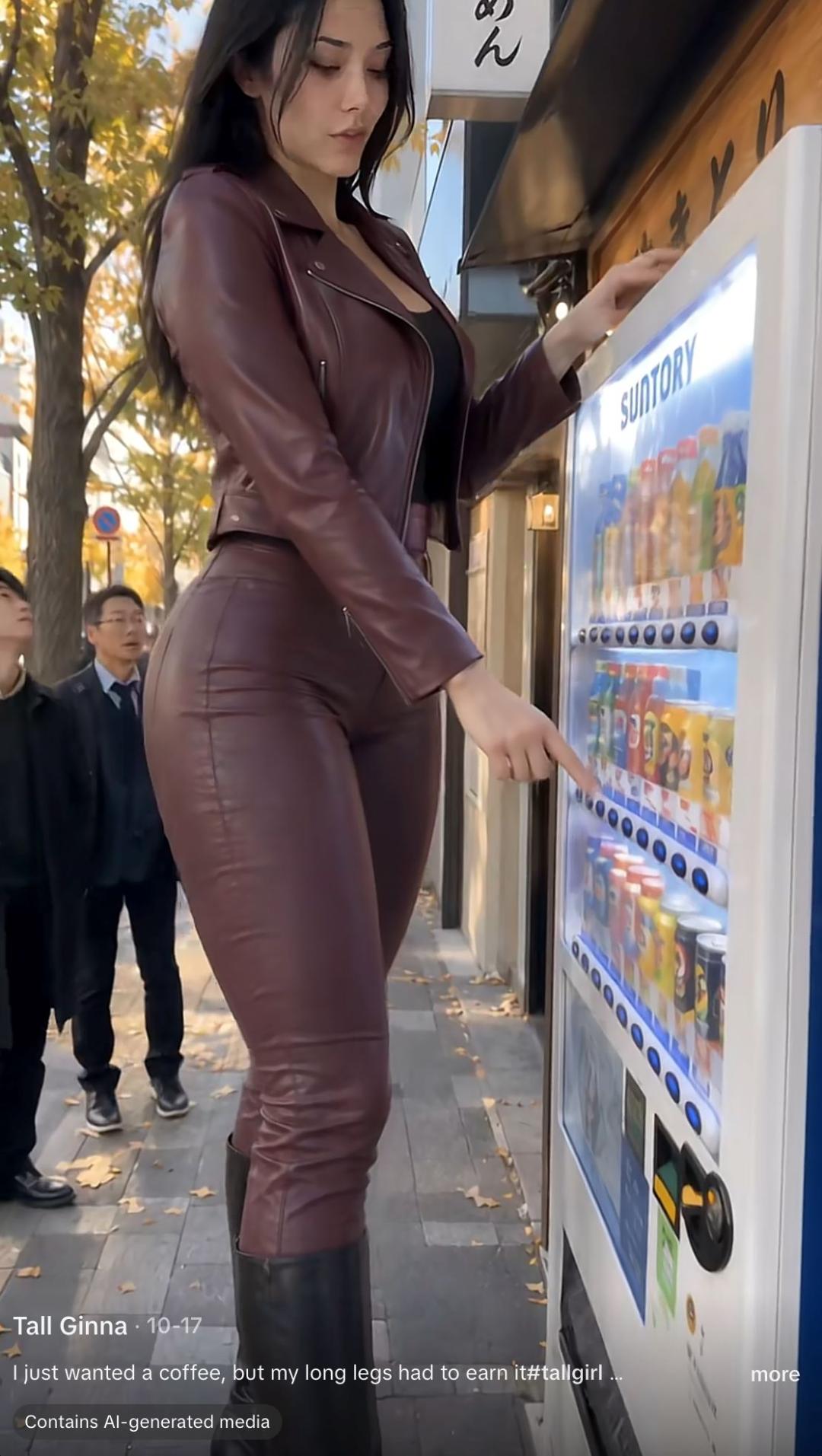
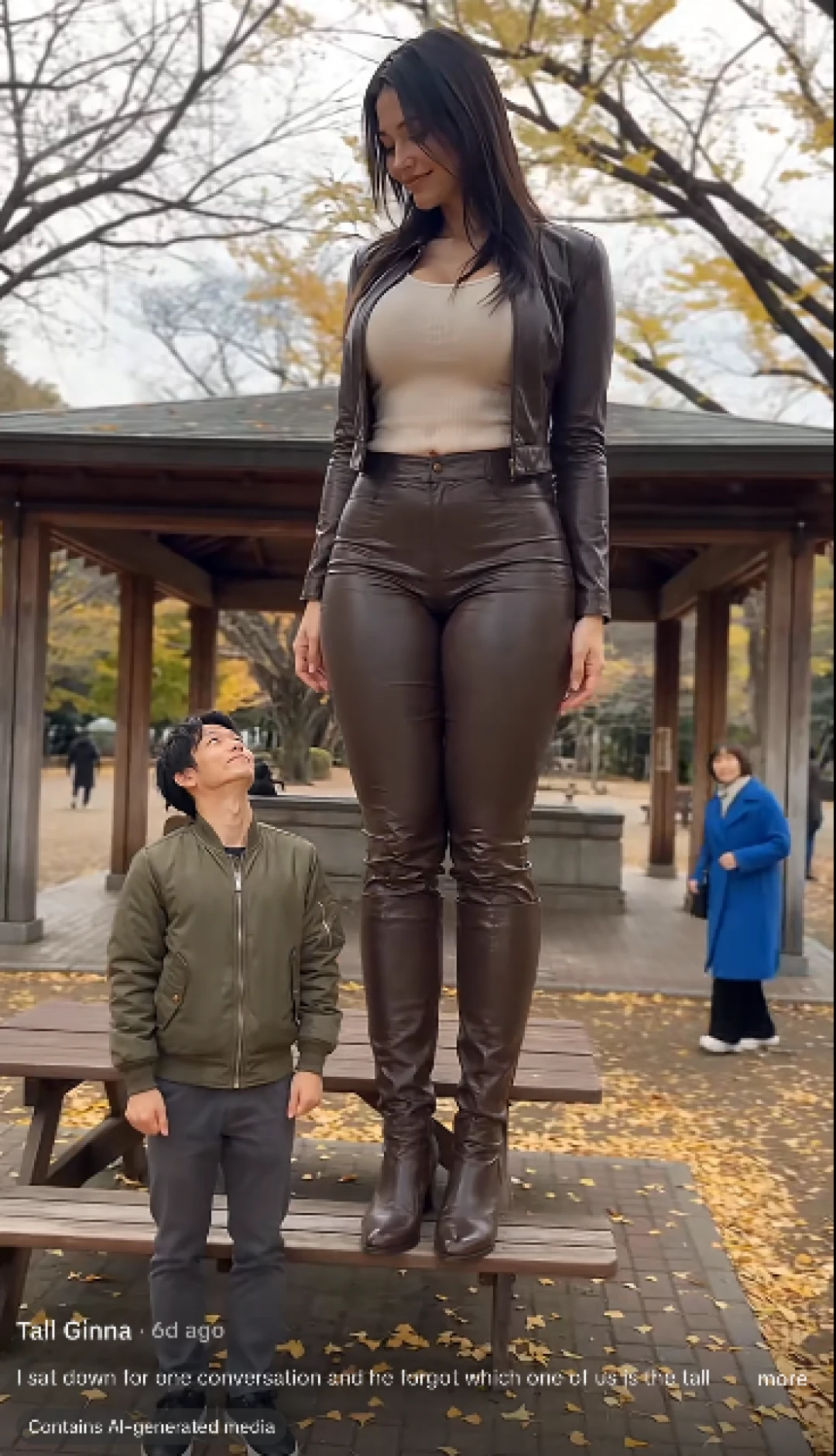
Ultimately, whether one views the content as an entertaining look at an extraordinary lifestyle or a showcase of modern digital art, Tall Ginna remains a masterclass in modern content creation. By cross-promoting the character across the @tall.ginna TikTok hub and the @verytallginna Instagram profile, the creators have built an engaging virtual experience.
While many indicators point to the likelihood of her being a AI-Generated character, the character continues to fascinate audiences globally as a boundary-pushing phenomenon that blurs the line between reality and advanced artificial rendering.
The information presented in this article is intended for general informational, educational, and entertainment purposes only. The analysis, observations, and opinions expressed herein are based on publicly available social media content and automated platform features as of the date of publication.
References to third-party social media handles, names, or media are provided solely for contextual identification and cultural commentary under fair use guidelines, and do not imply endorsement, affiliation, or unauthorized copyright use.
While every effort is made to ensure the contextual accuracy of the discussion, the content does not constitute definitive medical, legal, or technical documentation, and readers are encouraged to evaluate the digital media independently.
This article has been written by a Scam Fighter Contributor, De-Reviews.com Team. If you believe the article above contains inaccuracies or needs to include relevant information, please contact ScamAdviser.com using this form.
De-Reviews.com Team is a group of scam researchers, editors, and online safety advocates dedicated to exposing online fraud and helping consumers stay safe online. The team has been investigating scams, fraudulent websites, phishing campaigns, and other online threats since 2014. Read the Full Author Profile.
