
EN
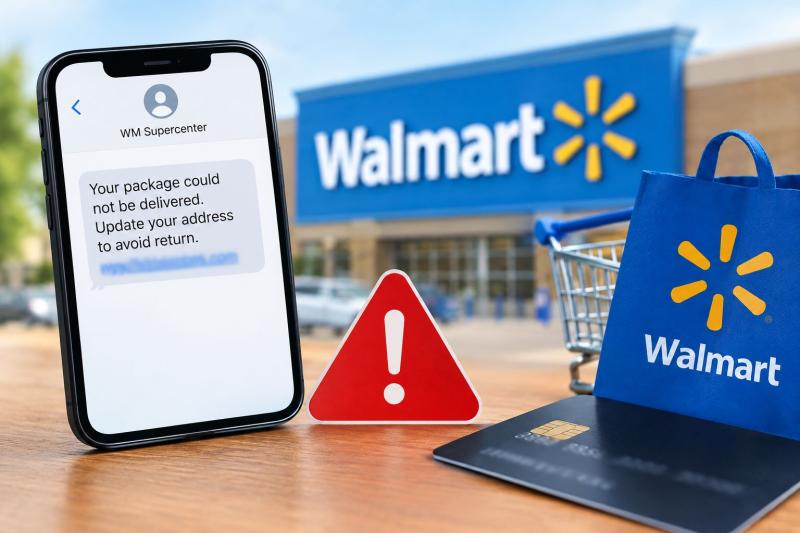
Walmart is one of the largest retailers in the United States, serving millions of customers through its stores and online services. Unfortunately, the popularity of the Walmart name also makes it attractive to fraudsters. Criminals regularly impersonate Walmart through text messages, phone calls, fake websites, gift cards, job offers, and online shopping promotions.
One of the most common examples is the WM Supercenter text scam, where a message claims there is a problem with a delivery or an unexpected purchase. Other schemes can target Walmart shoppers through fake gift cards, counterfeit websites, fraudulent marketplace listings, and fake employment opportunities.
Here are some of the Walmart related scams consumers should know about.
The most widespread threat right now arrives directly on your smartphone. Victims receive an urgent text message that appears to come from Walmart or a shipping carrier.
The text claims that a package from "WM Supercenter" cannot be delivered due to an incorrect address, an unpaid fee, or another delivery issue. Alternatively, the text might claim that your account has been locked due to suspicious activity.
The message includes a link leading to a highly convincing, spoofed Walmart login page or a fake postal tracking website.
If you enter your login credentials, the scammers may hijack your real Walmart account, including any saved credit cards. If the message asks for a small "redelivery fee," entering your full credit card number can hand your payment information directly to fraudsters.
For more details about this particular type of fraud, see this related guide: WM Supercenter Scams - How to Protect Yourself..
If you receive an unexpected Walmart alert, do not use the link or phone number provided in the message. Instead, open the official Walmart app or manually visit Walmart's website and check your account.
Phone scammers have upgraded their tactics with sophisticated artificial intelligence, making some Walmart-related calls sound surprisingly realistic.
In this version, you receive an automated call from an AI-generated voice claiming to be a Walmart fraud-prevention alert. The recording says an unauthorized charge of exactly $919.45 for a PlayStation 5 and a 3D headset is pending on your account.
The message then urges you to "press 1" to speak with a representative and dispute the charge. If you do, you may be connected to a high-pressure scammer who claims they need to "secure your funds" and then asks for sensitive information such as your Social Security number, banking details, credit or debit card information, Walmart account credentials, verification codes, or remote access to your computer.
The realistic voice and specific purchase amount are designed to make the call sound genuine. However, a professional-sounding AI voice does not prove that the caller is legitimate.
If you receive such a call, hang up and independently check your Walmart and financial accounts through official channels. Do not press buttons, provide personal information, or give anyone remote access to your computer based on an unexpected call.
You don't have to be online to get scammed by Walmart fraudsters; this scheme happens right on the store floor. Scammers visit physical Walmart Supercenters and quietly take stacks of gift cards from open display racks.
Using specialized tools or heat guns, they gently peel back the security stickers, record the card numbers and PINs, and place a new scratch-off sticker over them before returning the cards to the racks.
They then use automated software to constantly check the balances of those recorded gift-card numbers. The exact moment an unsuspecting customer purchases and activates the card at the cash register, the software detects it and the scammer can instantly drain the funds online, sometimes before the buyer even leaves the parking lot.
Walmart.com allows third-party merchants to list products, similar to Amazon. Fraudsters can take advantage of this by creating fake or hijacked seller accounts and offering popular electronics, luxury goods, beauty products, and other items at steep discounts.
The danger is that buyers may receive cheap counterfeits, expired or low quality products, a different item, or nothing at all.
Scammers may also create independent lookalike websites with Walmart related domains, such as walmart-clearance-shop.com, advertising unrealistic clearance deals. These sites may exist mainly to collect shoppers' credit-card information rather than sell genuine products.
A low price alone does not prove fraud, but unusually large discounts combined with a new seller, limited reviews, vague product information, or suspicious communication should raise concerns.
Before buying, check the "Sold and shipped by" information, review the seller's history and ratings, and carefully check the website address before entering payment details.
One of the most persistent online threats involves lookalike domains promoting massive, unrealistic Walmart giveaways. You may encounter a post on social media, a pop-up ad, or an email claiming that Walmart is giving away $500 to $1,000 gift cards or "grocery relief packages" to celebrate an anniversary or reward random users.
Clicking the link takes you to a random, anonymous domain or a sequence of random characters. The page asks you to complete a brief customer satisfaction survey. Once finished, it claims you must complete a series of tasks or deals to unlock the reward, such as signing up for credit card trials, downloading mobile apps, or providing your phone number.
There is no gift card. This is a deceptive lead generation and data harvesting funnel. The scammers may sell your personal details to aggressive data brokers and advertisers, leading to a flood of spam calls and targeted phishing attacks. Worse, the trial offers you sign up for may quietly begin charging your credit card once the 30-day trial period expires.
Be especially careful with advertisements promising large rewards for completing a very simple survey. You can read more about this type of promotion in this ScamAdviser review of the $750 Walmart Gift Card scam.
The Walmart Secret Shopper job scam is a classic corporate impersonation scheme that relies on the promise of easy money. Fraudsters use the Walmart name to make fake employment offers appear legitimate.
A victim may receive an email, text message, or realistic looking letter offering a job as a Walmart Secret Shopper or quality evaluator. The offer may promise easy work and good pay for evaluating stores or testing Walmart's transaction system.
The fraudster may then mail the victim a legitimate-looking corporate check. The instructions typically tell the recipient to deposit the check, keep around $300 as a commission for their time, and use the remaining balance to purchase Walmart gift cards. The victim may be told that the gift cards are needed to test the store's transaction system and then be instructed to send photos of the gift card codes to the handler.
The check, however, is entirely fake. Because banks may make deposited funds available before a check has fully cleared, the money can temporarily appear in the victim's account. This can make the offer look legitimate and encourage the victim to spend the money.
A few days later, the bank may discover that the check is fraudulent and reverse the deposit. By then, the victim may have already purchased hundreds or thousands of dollars in Walmart gift cards and sent the codes to the fraudster. The victim can then be left legally responsible for the money they spent, while the fraudster has already used or drained the gift-card balances.
Walmart specifically warns consumers about fraudulent employment schemes involving fake checks and gift cards. Any unexpected Walmart job offer that asks you to deposit a check, purchase gift cards, and send the card numbers or codes to someone should be treated as a major warning sign.
Beyond the official marketplace, cybercriminals launch entirely independent "spoofed" shopping websites designed to capture eager bargain hunters.
Scammers register deceptive, multi-layered domain names that sneakily incorporate the brand name, such as walmart.eeits.com, walmart.mgcto.com, and walmart.gxboo.com, or deploy temporary networks of cheap .shop websites. They run heavily discounted ads on social media showcasing massive clearance sales on electronics, tools, or luxury items.
These rogue websites copy Walmart's exact corporate logo, color scheme, and typography to appear legitimate. There is no real product inventory. The fake checkout page exists solely to harvest your full credit-card number, expiration date, CVV code, and billing address. In many cases, victims' cards are then immediately used for unauthorized international transactions.
To keep your money safe, remember these golden rules of Walmart fraud prevention:
The safest approach is to verify everything independently. If you receive a suspicious Walmart text, do not click its link. Open the official Walmart app or manually enter the official website into your browser.
If someone calls about a suspicious Walmart purchase, hang up and check your account yourself.
If you see an unfamiliar charge on your bank or credit- card statement, contact your financial institution using the number on the back of your card. Do not use a number supplied by an unexpected caller.
For gift cards, inspect the packaging before purchasing and never give the card number or PIN to a stranger.
When shopping online, carefully examine the seller, product listing, price, website address, and payment page.
Walmart's official fraud resource also advises consumers not to respond to suspicious emails, advertisements, websites, automated calls, or text messages.
If you clicked a suspicious link but did not provide information, close the page and avoid returning to it.
If you entered your Walmart password, change it through the legitimate Walmart website or app. If you reused that password elsewhere, change it on those accounts too.
If you provided credit card or bank information, contact your financial institution immediately and ask about securing the account or card.
If you purchased gift cards and gave the codes to a fraudster, contact the gift card provider as quickly as possible and keep the receipts and transaction information.
You can also report fraudulent activity through the FTC Report Fraud Portal. Walmart provides additional guidance and reporting information through its official Walmart Corporate Fraud Alerts page. Walmart says suspected Walmart-related fraud can also be reported through the appropriate channels listed on its fraud resource.
The bottom line is simple: Walmart is not trying to text you about missing packages, nor are they calling to cancel a surprise $919 PlayStation order.
These sophisticated fraud networks are counting on your panic or your excitement to bypass your better judgment. Walmart will never ask you to buy third party gift cards, pay fees to claim raffle prizes, or hand over your account passwords over the phone or text.
By staying calm, verifying every alert directly through your official Walmart app, and ignoring high pressure tactics, you can keep your hard earned money exactly where it belongs: in your wallet. Stay vigilant, shop smart, and report any suspicious links immediately.
The information in this article is provided for educational and awareness purposes. Company names, phone numbers, sender names, and other details referenced may have been impersonated, spoofed, or otherwise misused by scammers. Their appearance in this article does not necessarily identify the legitimate company, owner of a phone number or account as being involved in fraudulent activity.
This article has been written by a Scam Fighter Contributor, De-Reviews.com Team. If you believe the article above contains inaccuracies or needs to include relevant information, please contact ScamAdviser.com using this form.
De-Reviews.com Team is a group of scam researchers, editors, and online safety advocates dedicated to exposing online fraud and helping consumers stay safe online. The team has been investigating scams, fraudulent websites, phishing campaigns, and other online threats since 2014. Read the Full Author Profile.
