
RU
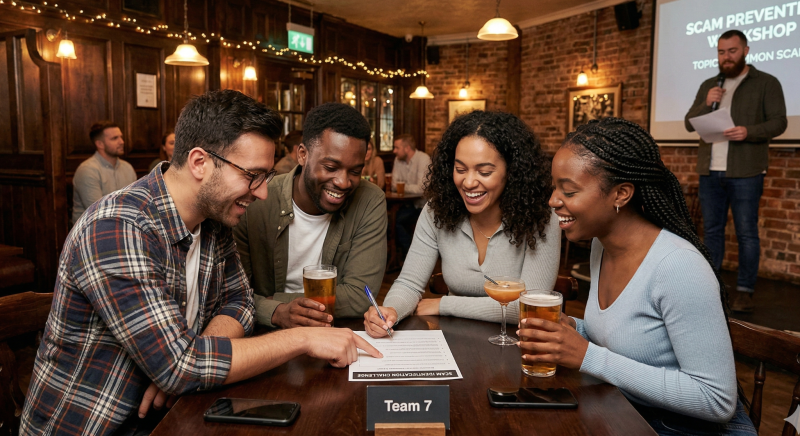
Q1. $250 lands in your Apple Cash from a number you don’t know. A minute later: "So sorry, I sent that to the wrong person. Could you send it back? It’s my rent money." What do you do?
A) Send it straight back. It’s the honest thing to do.
B) Send it back, but as a gift card like they ask.
C) Don’t send anything. Reject or leave the payment, and contact Apple Cash support.
D) Spend it. Their mistake, not yours.
Correct answer: C) Don’t send anything. Reject or leave the payment, and contact Apple Cash support.
Why: The payment could be part of a scam involving stolen funds. Sending the money back yourself could leave you out of pocket if the original payment is reversed. Let Apple Cash support handle it.
Q2. A recruiter messages you about a well-paid remote job. They want to move the chat to Telegram and ask for $80 for a "background check" before your interview. What’s your move?
A) Pay it. Background checks are normal.
B) Find the job on the company’s own careers page, and stop replying to the recruiter.
C) Move to Telegram, but refuse to pay.
D) Send a photo of your ID instead of the fee.
Correct answer: B) Find the job on the company’s own careers page, and stop replying to the recruiter.
Why: Asking for an upfront fee before an interview is a major red flag. Scammers often use fake job offers to steal money or personal information. Verify the vacancy through the company’s official website before proceeding.
Q1 · A caller says they're a Medicare enrollment helper. They know your name and address, and can get you a cheaper plan with a free walker thrown in. They just need you to read out your Medicare number to "verify" you. What do you do?
A) Read it out — they already know your name and address, so they must be legitimate
B) Give them only the last four digits to be safe
C) Hang up, then make any plan changes yourself through Medicare.gov or 1-800-MEDICARE
D) Pay the small sign-up fee they mention so the free gift ships faster
Correct answer: C) Hang up, then make any plan changes yourself through Medicare.gov or 1-800-MEDICARE
Why: Scammers may pose as Medicare helpers to steal your Medicare number. Contact Medicare directly to verify offers and make plan changes.
Q2 · A caller warns that your bank account has been hacked. They tell you to call the number on the back of your bank card — but they don't hang up, and say they'll "transfer" you to a secure line. What should you do?
A) Stay on the line — they're connecting you to the bank's official number, so it's safe
B) End the call completely, then ring the number on your card from a different phone
C) Move your savings to the "safe account" they suggest while the bank investigates
D) Read them the one-time code your bank just texted you so they can lock the account
Correct answer: B) End the call completely, then ring the number on your card from a different phone
Why: Scammers can keep a phone line connected while pretending to transfer you to your bank. Hang up completely and never share verification codes or move money to a “safe account.”
Q1 · A site has a ScamAdviser trust score of 78 out of 100. You're about to buy something. Does that score mean it's safe?
A) Yes — anything above 70 is trustworthy
B) Not necessarily — a higher score means lower risk indicators, but you should still check reviews, contact details, and return policies before paying
C) Yes — ScamAdviser guarantees sites with scores above 50
D) Only if the site also has a padlock in the address bar
Correct answer: B) Not necessarily — a higher score means lower risk indicators, but you should still check reviews, contact details, and return policies before paying
Why: A ScamAdviser Trust Score is an indicator of risk, not a guarantee that a website is safe. A higher score is generally a positive sign, but other factors should still be checked before making a purchase.
Q2 · You receive a cheque in the post from "State Farm" saying you're owed a dividend payment. It looks official and comes with a letter explaining the amount. What should you do before cashing it?
A) Cash it straight away — cheques in the post are always legitimate
B) Call State Farm directly using the number on their official website — not any number printed on the letter — to verify the payment
C) Deposit it and wait to see if it clears
D) Sign and return the enclosed form first to confirm receipt
Correct answer: B) Call State Farm directly using the number on their official website — not any number printed on the letter — to verify the payment
Why: Fake cheque scams often use convincing letters and real company names. Contacting the company through independently verified contact details helps confirm whether the payment is genuine before you deposit or cash the cheque.
Q1 · You find a site offering the iPhone 18 Pro at 30% off retail with "limited pre-order slots." The site looks professional, has reviews, and accepts Apple Pay. What should you check before paying?
A) Whether the discount is bigger than what Apple normally offers
B) The domain age and whether the site appears on ScamAdviser, new domains registered around a product launch are a major red flag
C) Whether the page loads quickly
D) Whether it has a padlock in the address bar
Correct answer: B) The domain age and whether the site appears on ScamAdviser. A newly registered domain around a major product launch can be a major red flag.
Why: A professional looking website, reviews, Apple Pay, and a big discount do not automatically make a store legitimate. Checking when the domain was registered and whether it has a ScamAdviser profile can help you spot warning signs before paying.
Q2 · Your bank calls to say your account has been compromised. They say the safest move is to transfer your funds to a "secure holding account" they have set up for you while they investigate. What is actually happening?
A) A standard fraud protection procedure all banks follow
B) An Authorised Push Payment scam — the "secure account" belongs to the scammer, not your bank
C) A temporary freeze while your bank verifies your identity
D) A legitimate request if the caller ID shows your bank's number
Correct answer: B) An Authorised Push Payment (APP) scam where the “secure holding account” actually belongs to the scammer
Why: Your bank will not ask you to move your money to another account to keep it safe. Scammers often impersonate bank staff and use urgent warnings about compromised accounts to pressure you into transferring your money. Even if the caller ID looks genuine, verify the request by contacting your bank through an official channel.
Q1 · You get a WhatsApp message from an unknown number: "Hi, sorry to bother you — I think I have the wrong number, but since we're talking, I work in crypto investments and have a great opportunity if you're interested." What is this?
A) A genuine cold outreach from a financial advisor
B) A "wrong number" scam designed to open a conversation and steer it toward a fake investment platform
C) Spam that will stop if you ignore it
D) A test from your phone provider
Correct answer: B) A “wrong number” scam designed to open a conversation and steer it toward a fake investment platform
Why: Scammers often pretend they have contacted the wrong person to start a harmless-looking conversation. Once you respond, they may build trust and eventually introduce a supposedly lucrative crypto investment opportunity, often directing you to a fake platform designed to steal your money or personal information.
Q2 · You find a well-written job posting on Indeed for a remote data entry role at a recognisable company name. The pay is above average, the description is detailed, and they ask you to apply via WhatsApp instead of the site. What does that signal?
A) The company prefers a faster hiring process
B) A strong sign the posting is fake — legitimate employers do not route job applications through personal messaging apps
C) A sign the role is highly competitive and they want quick responders
D) Normal for remote-first companies
Correct answer: B) A strong sign the posting is fake — legitimate employers do not route job applications through personal messaging apps
Why: Moving the conversation from a legitimate job platform to WhatsApp is a major red flag, especially when combined with unusually high pay. Scammers use recognizable company names and convincing job descriptions to make fake vacancies look legitimate, then use WhatsApp to request personal information, payments, or other sensitive details.
Q1 · You are about to check in for a flight and get a text: "Your booking requires urgent confirmation. Click here or your seat will be released in 30 minutes." The link leads to a page that looks exactly like the airline's site. What do you do?
A) Click and confirm — you cannot afford to lose your seat
B) Do not click — open the airline's official app or website separately and check your booking there
C) Reply to the text asking for more details
D) Forward the link to someone else to check
Correct Answer: B) Do not click, open the airline's official app or website separately and check your booking there.
Why: The message uses urgency and fear of losing your seat to pressure you into clicking. Even if the website looks identical to the airline's real site, it could be a phishing page designed to steal your login, payment details, or personal information. The safest move is to access the airline through its official app or a website you type in yourself and check whether there is actually a problem.
Q2 · Someone you met online two months ago has been warm, attentive, and consistent. They now mention a "once in a lifetime" crypto investment and offer to walk you through it personally. What is the clearest red flag here?
A) They met you online rather than in person
B) Building trust over weeks then steering the relationship toward a financial opportunity is the exact playbook of a romance investment scam
C) They are talking about crypto, which is inherently risky
D) They offered to help you personally rather than sending a link
Correct Answer: B) Building trust over weeks then steering the relationship toward a financial opportunity is the exact playbook of a romance investment scam.
Why: Romance investment scams often start with weeks or months of attention and emotional bonding before the scammer introduces an investment opportunity. The "once in a lifetime" pitch and personal guidance are designed to make the victim trust the investment rather than question it.
Q1 · You get a WhatsApp message from an unknown number: "Hey! We met at Sarah's last summer — hosting a rooftop thing this Saturday, hope you can make it!" with a link to "confirm your spot." You vaguely remember a Sarah. What do you do?
A) Click the link — it sounds like someone you might know
B) Do not click; ask the sender to confirm who they are before touching any link
C) Click just to see what the page looks like, then close it
D) Reply "Who is this?" and wait
Correct Answer: B) Do not click; ask the sender to confirm who they are before touching any link.
Why: This is a classic example of a "wrong number" or social engineering scam. The scammer tries to sound familiar ("Sarah's last summer") so you'll lower your guard and click the link.
Q2 · A friend tells you they use a VPN so they never land on scam websites. What is wrong with that assumption?
A) Nothing — VPNs block all malicious traffic
B) VPNs hide your IP and encrypt traffic but do not block phishing pages or fake stores — you can still land on and be fooled by scam sites
C) VPNs only work on desktop, not mobile
D) VPNs slow your connection too much to be useful for browsing
Correct Answer: B) VPNs hide your IP and encrypt traffic but do not block phishing pages or fake stores — you can still land on and be fooled by scam sites.
Why: A VPN's main job is to encrypt your internet traffic and hide your IP address, making it harder for others to monitor your online activity. However, it doesn't determine whether a website is legitimate. If you click a phishing link or visit a fake online store, a VPN won't stop you from seeing the site or prevent you from entering your personal information.
Q1. Вам звонят с точного номера телефона вашего банка. Звонящий знает ваше имя, последние 4 цифры вашей карты и говорит о подозрительной активности на вашем счете. Вас просят подтвердить полный номер карты, чтобы "заморозить транзакцию". Что делать?
А) Подтвердите номер карты - они и так много знают.
Б) Положите трубку и перезвоните в свой банк по номеру, указанному на обратной стороне карты
C) Попросите их прислать вам данные по электронной почте
Г) Назовите только первые 4 цифры, чтобы проверить, настоящие ли они.
Ответ: B) Положите трубку и перезвоните в банк по номеру, указанному на обратной стороне вашей карты.
Почему: Телефонные номера могут быть подделаны, а мошенники часто уже располагают частичной информацией, полученной в результате утечки данных. Настоящий банк никогда не будет заставлять вас сообщать полный номер карты во время неожиданного звонка. Всегда проверяйте информацию, позвонив по официальному номеру самостоятельно.
Q2. Вы заходите на сайт, и появляется окно CAPTCHA, в котором вам предлагается нажать клавиши Windows + R, вставить код и нажать Enter, чтобы "подтвердить, что вы человек". Это выглядит как обычная проверка безопасности. Что происходит?
A) Законная функция доступности для пользователей клавиатуры
Б) Поддельная CAPTCHA, предназначенная для запуска вредоносного ПО на вашем устройстве - немедленно закройте страницу
C) Стандартный запрос на обновление системы безопасности Windows
D) Проверка совместимости браузера - можно продолжить.
Ответ: B) Поддельная CAPTCHA, предназначенная для запуска вредоносного ПО на вашем устройстве - немедленно закройте страницу.
Почему: Настоящие CAPTCHA-тесты никогда не просят вас открыть команду "Выполнить" или вставить код в компьютер. Этот трюк используется для установки вредоносного ПО, кражи паролей или предоставления мошенникам удаленного доступа к вашему устройству. Если сайт просит вас выполнить команду, немедленно закройте его.
Q1. Вам позвонил человек, представившийся помощником шерифа. Они говорят, что вы пропустили заседание суда присяжных и на ваш арест выписан ордер - если вы немедленно не заплатите штраф в размере 500 долларов с помощью подарочной карты, он будет снят. Что вам делать?
А) Заплатите штраф - вы же не хотите, чтобы вас арестовали
Б) Спросите номер нагрудного знака и отдел, затем положите трубку и позвоните в суд по официальному номеру.
C) Попросите их сначала выслать ордер по электронной почте
Г) Заплатите половину сейчас, а об остальном договоритесь позже
Ответ: B) Спросите их данные, повесьте трубку и позвоните в суд по официальному номеру.
Почему: Настоящие правоохранительные органы не будут требовать мгновенной оплаты - и уж точно не с помощью подарочных карт. Срочность + необычные способы оплаты = мошенничество.
Q2 - На вашем iPhone появляется всплывающее окно: "Apple Security Breach - Ваш Apple ID был взломан. Немедленно позвоните в службу поддержки Apple: 1-800-XXX-XXX". Логотип выглядит настоящим, а номер кажется официальным. Как правильно поступить?
А) Сразу же позвонить по номеру во всплывающем окне
Б) Закройте всплывающее окно, перейдите непосредственно на сайт apple.com/support и используйте только официальный контактный номер Apple
C) Перезагрузите телефон и позвоните по номеру, если всплывающее окно вернется.
D) Сделайте скриншот и отправьте его на номер для проверки.
Ответ: B) Закройте всплывающее окно и перейдите непосредственно на официальную страницу поддержки Apple.
Почему: Легальные компании не используют случайные всплывающие окна с номерами телефонов. Такие оповещения призваны подтолкнуть вас к звонку мошенникам.
Вопрос 1 - На вашем ноутбуке раздается громкий сигнал тревоги и появляется полноэкранное всплывающее окно: "Обнаружен КРИТИЧЕСКИЙ ВИРУС - позвоните в службу поддержки Microsoft СЕЙЧАС: 1-800-XXX-XXX". Ваш экран застыл. Что делать?
A) Немедленно позвоните по этому номеру - он выглядит официальным.
Б) Принудительно закройте браузер с помощью диспетчера задач или принудительного выхода, затем запустите настоящий антивирус.
C) Нажмите кнопку "X" на всплывающем окне, чтобы закрыть его
D) Оплатите указанную плату - вероятно, это реальное продление подписки.
Ответ: B) Принудительно закройте браузер (диспетчер задач / принудительный выход), а затем запустите свой настоящий антивирус.
Почему: Это всплывающее окно является классической программой-страшилкой - нажатие на любую кнопку или звонок по номеру только затянет вас еще глубже.
Вопрос 2 - Вы получили сообщение от "PennDOT", в котором говорится, что ваши водительские права будут приостановлены через 24 часа, если вы не оплатите штраф по ссылке. Ссылка выглядит официально. Что является самым большим тревожным сигналом?
А) Государственные учреждения никогда не связываются с вами по СМС со ссылками на оплату
B) Сумма штрафа кажется слишком маленькой
C) Сообщение пришло с неизвестного номера
Г) В сообщении нет орфографических ошибок
Ответ: А) Государственные учреждения не отправляют сообщения с требованием срочной оплаты по ссылкам.
Почему: Срочность и ссылка на платеж - это настоящая улика, а не орфография или форматирование.
Сможете ли вы вовремя повесить трубку?
4 реальных сценария мошенничества. Прочитайте каждый из них и выберите свой ответ, а затем нажмите кнопку, чтобы узнать, как вы справились.
Q1 - Звонящий говорит, что он из иммиграционной службы и у вас срочные проблемы с визой. Они требуют немедленно назвать номер вашего паспорта, чтобы избежать депортации. Какой признак наиболее подозрителен?
А) Они упомянули о депортации
Б) Холодный звонок + немедленное требование предоставить личную информацию на месте
C) Они знают ваше имя
Г) У них официально звучащее название отдела
Ответ: Б) Холодный звонок + немедленное требование личной информации на месте
Почему: Легальные правительственные агентства не звонят по телефону и не требуют немедленно предоставить конфиденциальную информацию. Срочность + просьба - это самый большой тревожный сигнал.
Вопрос 2: Голос звонящего звучит немного роботизированно, но очень официально. Они назвали вам номер жетона и сказали, что вы можете проверить его онлайн. Что вы сделаете?
A) Поищите предоставленный номер жетона.
B) Положите трубку и позвоните по официальному номеру агентства с его сайта
C) Попросите их отправить электронное письмо.
D) Спросите их руководителя.
Ответ: B) Положите трубку и позвоните по официальному номеру агентства с его сайта.
Почему: Мошенники могут давать фальшивые номера жетонов и поддельные сайты верификации. Единственный безопасный шаг - самостоятельно связаться с агентством, используя его официальные контактные данные.
Q3 - "Сотрудник таможни" говорит, что посылка на ваше имя была перехвачена с запрещенными предметами. Чтобы очистить ваше имя, им необходимо заплатить за обработку. Это:
A) законная таможенная процедура
B) Афера с перехватом посылки - никакой посылки не существует
C) Проблема соблюдения налогового законодательства
D) Плата за перенаправление доставки
Ответ: Б) Афера с перехватом посылки - посылки нет
Почему: Это классическая тактика запугивания. Никакой посылки нет - это просто история, чтобы заставить вас заплатить "сбор" за решение несуществующей проблемы.
Q4 - Звонящий предупреждает, чтобы вы никому не рассказывали о расследовании, иначе вас арестуют. Эта тактика направлена на:
A) Защитить ваши законные права
Б) Изолировать вас, чтобы никто не смог предупредить вас о том, что это мошенничество
C) Соблюсти закон о защите данных
D) Надежно подтвердить вашу личность
Ответ: B) Изолировать вас, чтобы никто не мог предупредить вас о том, что это мошенничество
Почему: Секретность - это огромный тревожный сигнал. Мошенники хотят отрезать вас от друзей или родственников, которые могли бы помочь вам понять, что происходит.
Чтобы узнать больше об этом, вы можете зайти на сайт Scam Univeristy
